
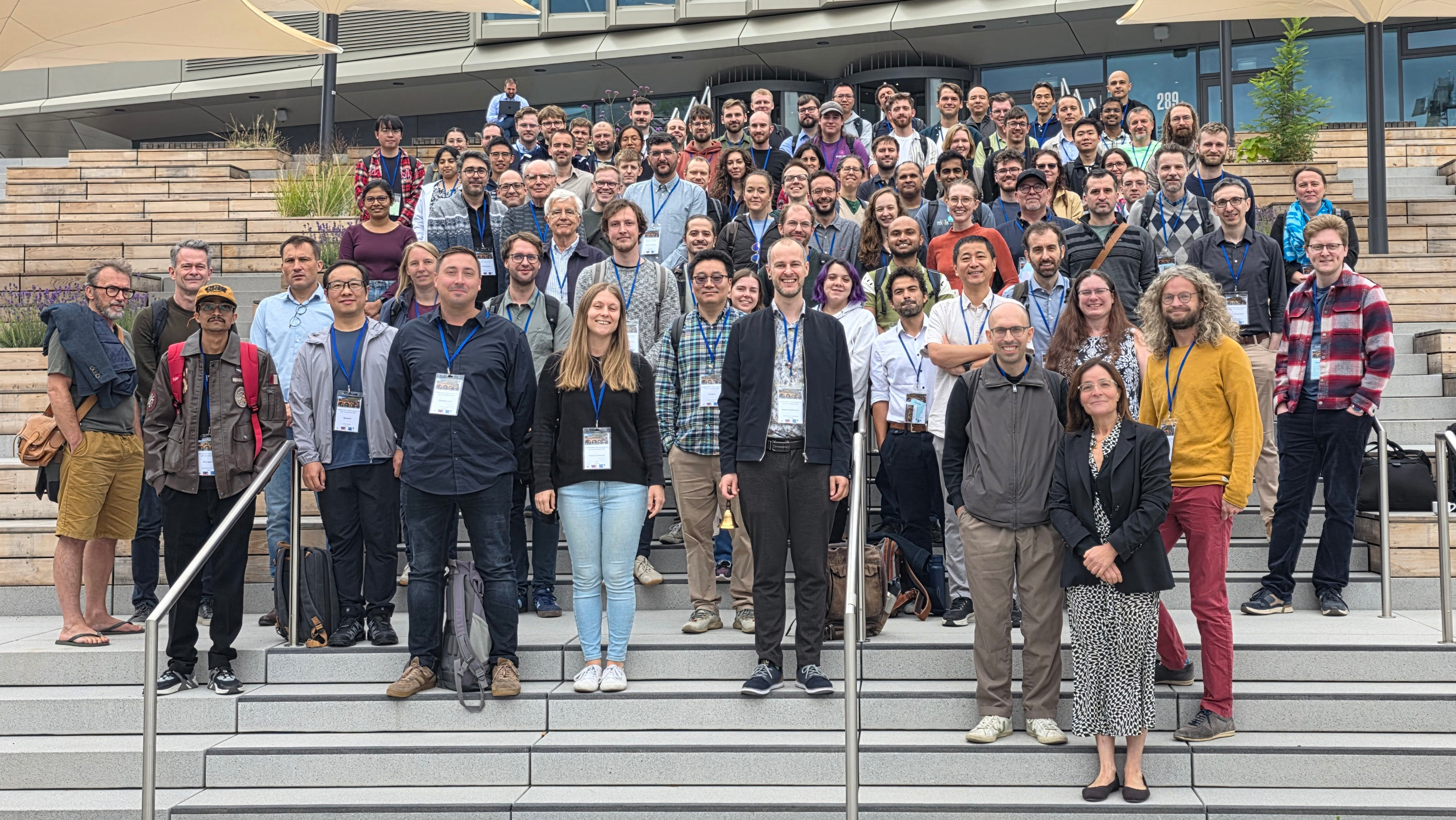
Workshop participant photo
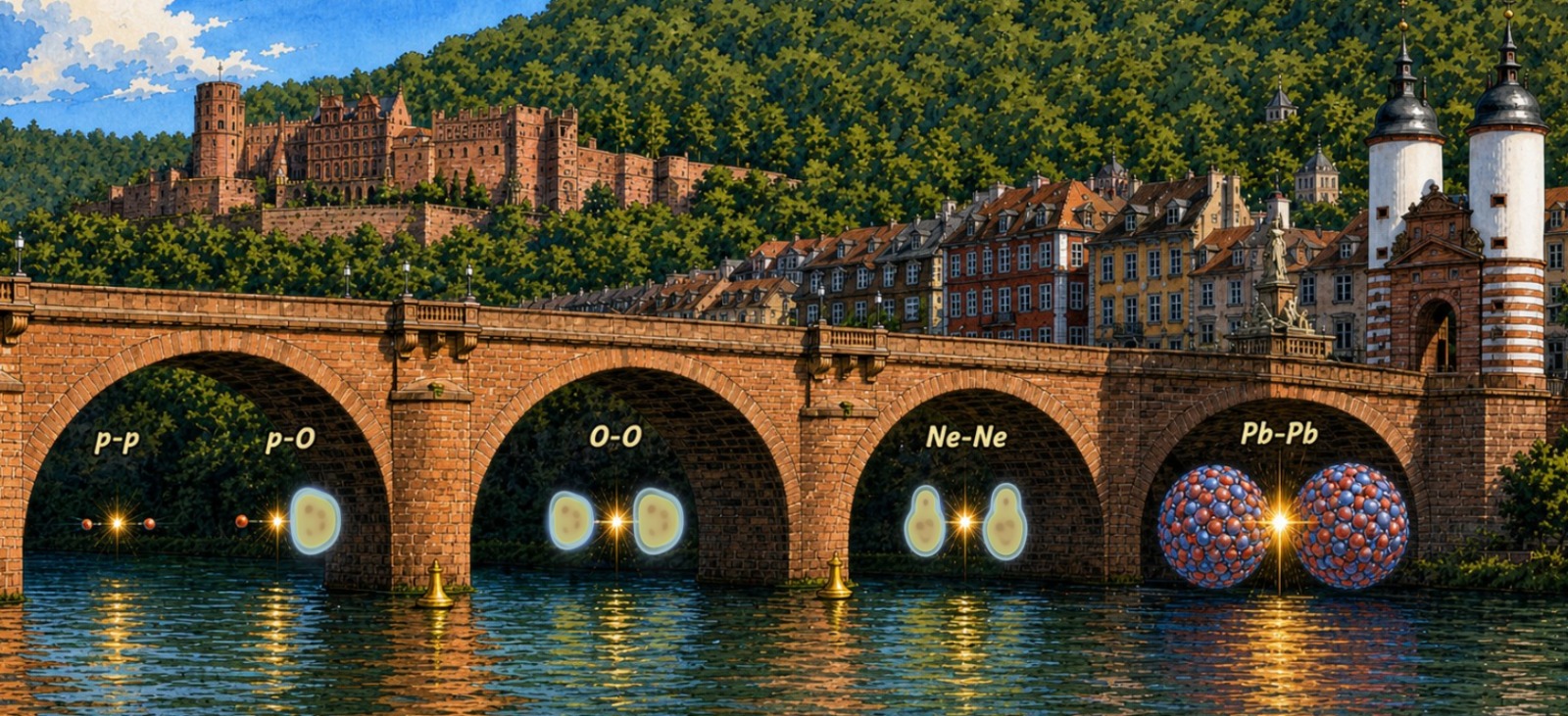
Recent light-ion collision campaigns — proton-oxygen, oxygen–oxygen and neon–neon runs at the LHC, and oxygen–oxygen collisions at RHIC — have opened a transformative window onto the origins of collective behavior in small QCD systems, and in the study of the system-size dependence of the quark-gluon plasma. Simultaneously, high-energy collisions offer a novel probe of nuclear ground-state structure, with implications potentially extending from nuclear structure, to nuclear astrophysics, to searches for neutrinoless double beta decay.
Driven by these research frontiers, the 2026 EMMI Workshop on Light-Ion Collisions serves as a dedicated forum to synthesize the emerging experimental results, clarify their implications for the field, and discuss scientific cases for ion runs in LHC Run 4 and beyond.
Scientific program:
- Out-of-equilibrium QCD phenomena and onset of collectivity in nuclear collisions
- Onset of jet quenching in small and intermediate systems
- Collectivity of heavy flavors across system sizes and shapes
- Interdisciplinary connections (nuclear structure, nuclear astrophysics, neutrinoless double-beta decay, cold atoms)
- Prospects and opportunities for future ion runs at LHC Run 4 and beyond
The workshop will start on Monday morning (September 21st) and end on Friday after lunch (September 25th). A workshop fee of 150 EUR will be charged to participants. This fee covers coffee breaks, lunches, the welcome reception, and the conference dinner. Financial support will be available for a limited number of early-career researchers.
It will be possible to follow the talks and discussions on zoom (no recordings), with a limited option to ask questions at https://cern.zoom.us/j/62118243429?pwd=MTepbUbGxB661OS6surbRpBouTWh7V.1
Two-question questionnaire:
https://forms.gle/2Ei9ohgeotfmqfLU9